My playbook for flexible teams
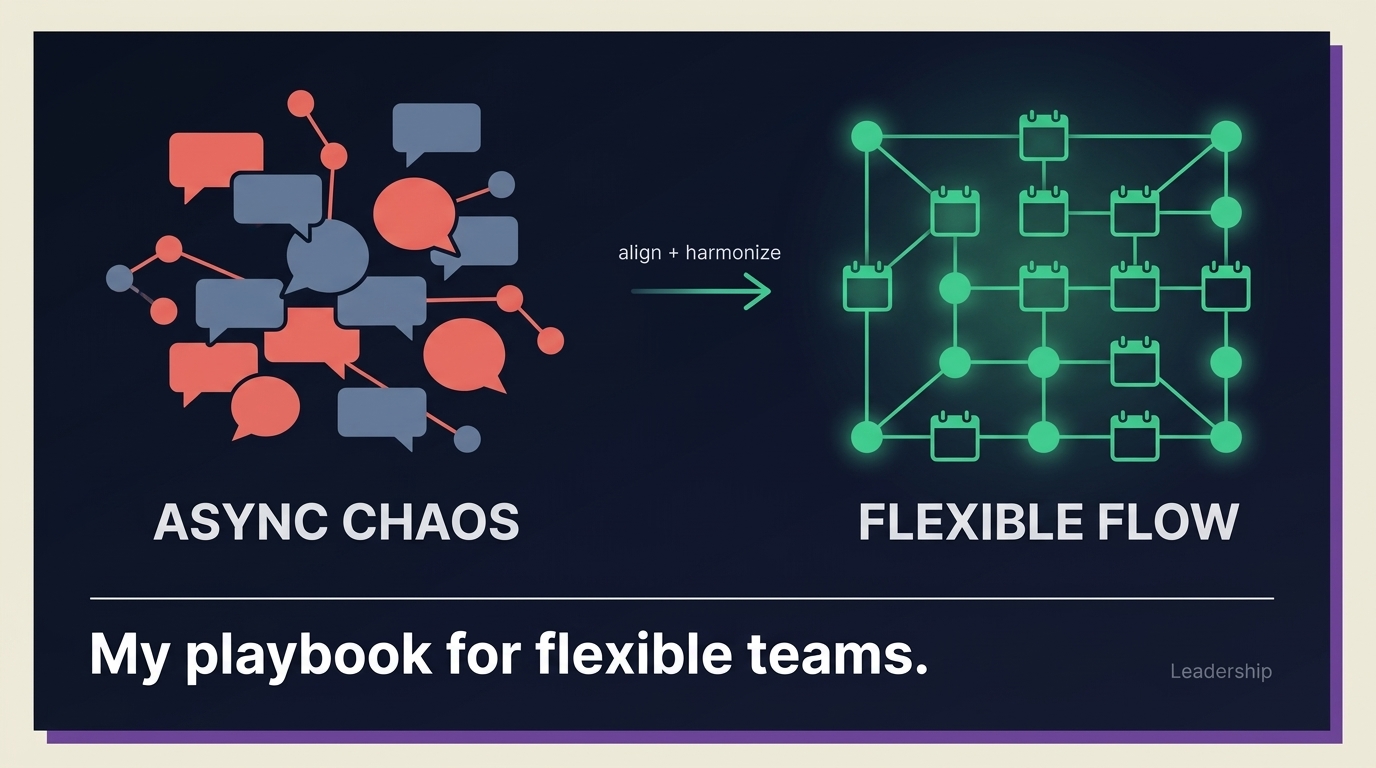
We have come to relate remote to async but this is a common misconception. In reality, pure async-first approaches rarely work in fast moving product environments. Remote first is about giving people flexibility in where and how they work without giving up speed, alignment and human connection; to do this however you need the proper habits to support it.
There are a few rules, even if the terms if a bit harsh, that I rely on to make flexible work in either a fully distributed setup or hybrid.
1. Flag early (without crying wolf)
This is my number one rule, it is the first thing I ask anyone working with me, be it someone who reports to me or someone I report to. Silence is something that can get expensive real fast and it is easy to increase your tap especially when you are not sitting all together. If something is slipping, heading in the wrong direction, or is blocking you, it is crucial to flag it as early as possible.
This should not be about panicking or crying wolf over every minor hurdle, it is about creating space for the team to work proactively instead of retroactively towards issues that might arise. Early visiiblity allows people to prepare, adjust expectations and take calculated risks while there is still time and options. In environments where priproties shift constantly, employing this habit beats late perfection every time.
2. Keep messaging for messages
Text over slack is great for sharing updates, receiving notifications and answering short simple questions. It is, however, terrible when it comes to solving complex problems or even worse, making nuanced decisions. The moment you find asking yourself if what you are writting is too long or going back and forth in a thread, it is better to stop and gather the involved parties in a call.
Many times, a short video call can solve an issue must faster than most thread conversations not just because of the ease of communication but due to clues and nuances hidden in spoken speech and the additive of human interaction. Because of this I am also a big fan of core working hours. This is not about forcing people but creating a harmony. Protecting a few overlapping hours gives evreyone the flexibility to structure the rest of their schedule while at the same time ensuring that there is a dedicated time in which we can expect real connection live if it is needed.
3. Write things down and Share Context
Not everything needs to be explained on a video call or buried in chat messages. Each medium has its place, and over time, written docs—like PRDs, proposals, ways of working, or decision logs; are what actually keep flexible teams aligned. Putting decisions in writing means people can read them on their own schedule without guessing what was agreed on or why.
Just as important is how you share that work. Everyone’s attention is split across chat, meetings, and even the AI agents we run alongside our daily tasks. Just like an AI needs clear context to give you a useful answer, your teammates need context before they can jump in and help. Don’t drop a bare link or a vague question in a channel and expect people to piece together the backstory. Explain what problem you’re trying to solve, include the background upfront, and make it easy for people to find what they need.
5. Match high flexibility with high professionalism
At the end of the day, all of this comes down to professionalism. Flexible work only holds together when there is real trust, and you build that trust through accountability. People rely on your work, so you have to own your outcomes, communicate clearly, and stick to your commitments.
That’s true on any team, remote or not. It’s a straightforward trade-off: the more flexibility you want in how and when you work, the more discipline and professionalism you need to bring to the table to make it work for everyone else.